
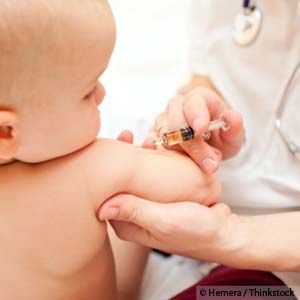
British Columbia's Fraser Valley, southern Alberta, parts of Southwestern Ontario and New Brunswick are dealing with severe outbreaks of a disease that was once on the wane - pertussis, more commonly known as whooping cough, which can be especially deadly if contracted by infants. The United States, meanwhile, appears headed for its worst year for whooping cough in more than five decades, with more than 18,000 cases reported so far.
As health authorities on both sides of the border urge parents to get their children vaccinated, and start offering free vaccine clinics for adults, the outbreaks have fuelled debate about the vaccine's effectiveness over time. The latest spread of the disease can be partially explained by parents who shun vaccinating their children. But health officials say a larger issue is at play: Children under six years need five doses of the whooping cough vaccine, with a booster in their teenage years. Routine vaccination efforts, however, have stopped by the time they reach adulthood.
"We've got waned immunity," said Doug Sider, Ontario's acting associate medical officer of health. "We're great at emphasizing childhood vaccinations. We need to do a much better job at emphasizing adult vaccinations."
New Brunswick has more than 1,000 confirmed pertussis cases to date. Southern Alberta, which usually has one to three cases a year, has 42 confirmed cases, including a one-month-old who died last month from complications caused by whooping cough.
The grieving family of that child, Harper Whitehead, encouraged parents and children to get the vaccine to prevent similar tragedies. Harper started coughing 10 days after her birth in May. She was hospitalized when her coughing became more severe. She died in hospital.
"We, as a family, aren't looking for attention from this tragic event, but to make people aware this is a real disease," Harper's aunt, Dani Whitehead, said in a statement. "This and other diseases like it can be prevented by families being immunized."
Many infectious diseases are cyclical. Whooping cough peaks every two to five years. Babies are especially vulnerable because they haven't been fully immunized against the disease. It can lead to pneumonia, brain damage and death. Infants under six months of age represent nearly 90 per cent of all pertussis-related deaths.
Ian Gemmill, medical officer of health for Kingston, Frontenac and Lennox and Addington Public Health, said research is looking at how often adults need a booster. Public health officials, he said, then need to make a firm recommendation.
"You and I won't die from it. We will be exhausted. We will be unhappy. But," Dr. Gemmill said, "the infants will."
In an effort to curb the current outbreak, health authorities in various parts of the country are offering free vaccination clinics for parents and caregivers of infants under one. Studies have shown that 75 per cent of infants infected with whooping cough got it from a contact at home.
"What we're trying to do is if we can get adults at any age ... and give them one pertussis vaccine, then we correct that waning adult immunity and we bolster that collective immunity," Dr. Sider said.
Damian Langton, 14, knows first-hand the havoc the disease can cause. Despite being vaccinated when he was younger, he was coughing so badly earlier this month that it burst some of his blood vessels and he had bruising around his eye. "I didn't think it would be that bad," the Toronto resident said. "I was shocked to know it was whooping cough."
His father, Jerry Langton, recalls his son was "gasping for air" as he coughed. Damian is on antibiotics and the cough is less frequent. Mr. Langton has this simple advice for other parents who have children with symptoms: "Treat it as quickly as possible, and don't use anything over the counter."



Comment: Whooping cough has made a return worldwide, but one of the leading experts on the disease has said that the bacteria has evolved and become less sensitive to the current vaccine. In fact, the new strain of pertussis is more virulent and he said that "We don't know how effective the vaccines are against the new strains." An investigation of the disease in San Diego County showed that nearly two out of three people who got whooping cough in San Diego County were immunized.
According to Dr Mercola: "It's a good time to reflect back on the SCARE that was created over people not getting pertussis vaccines. Now it's been revealed that those vaccines require six follow-up booster shots just to continue to work ... if they work at all. More likely than not, the vaccine provides NO protection in any case, as the strain that is causing the damage is not actually in the vaccine." For more information read:
Pertussis: Investigating An Epidemic
US: The California Whooping Cough Cover Up
20 facts about vaccines you won't likely see on a government website