
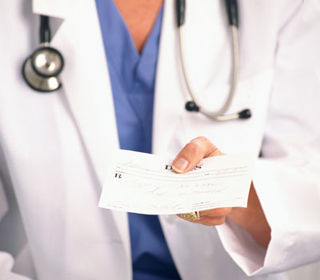
© rodale.com"Enjoy your statins...if you need me, I'll be at my yoga class."
THE DETAILS: For the study, complementary and alternative medicine included things like acupuncture, massage, chiropractic, Pilates, meditation, use of herbs, and a vegetarian diet. Compared to the 63 percent of the general working population that taps these natural healing methods, 76 percent of healthcare workers reported using complementary and alternative medicine. Looking strictly at healthcare workers, doctors and nurses were more than twice as likely to seek treatment from a massage therapist, chiropractor, acupuncturist, or other practitioner-based alternative medicine provider compared to other workers in the healthcare industry, such as technicians, assistants, or administrators. Doctors and nurses were more than three times as likely to tap natural remedies for self-treatment (herbs, exercise, yoga, and the like). "As insiders, healthcare workers understand what's missing in our medical system. They're more educated than others about orthodox and alternative medicine," alternative medicine practitioner Joya Lynn-Schoen, MD, said in a statement from the Health Behavior News Service.
"Mainstream medicine will say, 'Here's a pill' or 'Have an operation' or 'There's nothing wrong with you, you're just tired,'" Lynn-Schoen said.
WHAT IT MEANS: This new study showing that doctors and nurses are quite fond of natural remedies comes just weeks after new treatment guidelines published in the Archives of Internal Medicine called on doctors to use prevention, not drugs, to keep patients healthy. "Conventional drugs may provide dramatic short-term benefits, but it is usually at a significant cost health-wise and financially," says Isaac Eliaz, MD, founder of The Amitabha Medical Clinic and Healing Center in Sebastopol, CA.
"We are finding out with many newer pharmaceutical drugs, the cure is sometimes worse than the disease. But when looking at many alternative and complementary treatments, there's a much longer track record. For instance, acupuncture is based on a sophisticated and highly developed medical system that has been proven effective over thousands of years, and now validated extensively by modern science," Dr. Eliaz explains.
Harvard studies published in the 1990s already documented a shift to more natural medicine, finding that people opted for as many as 250 million more visits to alternative healthcare practitioners annually compared to medical doctors. Other research indicates that the more educated the consumers, the more likely they are to choose alternative health care as a primary approach. "Studies indicate that the majority of people do not want medicine to vanish, rather they want to stay healthy and use medicine as an emergency back up when more radical intervention is necessary," says Dr. Riekeman.
Use these natural remedy ideas to help preserve your health.
- Beat back pain naturally. Americans spend as much as a whopping $90 billion annually on lower back pain relief, with a large chunk of that price tag going to expensive surgeries that sometimes don't bring any pain relief. Turn to massage, chiropractic, and other natural back pain remedies before going under the knife for chronic back pain. Also check out our Best Yoga for Back Pain poses.
- Alleviate allergies, naturally. Now is the time to prepare yourself for fall allergies like ragweed and mold. For more information on how to use botanicals like butterbur, as well as yard tactics like raking up fallen leaves, to keep your allergy symptoms at bay, check out 5 Ways to Prep for Fall Allergy Season and our natural allergy-relief arsenal.
- Share a remedy. Got a safe, effective natural remedy that's been used by your family for generations? Share it on our Rodale Home Remedies Finder.




As a nurse, I became disenfranchised with the medical establishment. Giving medications and treatments I would avoid for myself. Same goes for my best friend, who is also a nurse.
We were forbidden from making alternative recommendations to our patients, and could be disciplined or lose our licenses for doing so.
I have not been to see a physician in years, and only will in an emergency. The best medicine I've ever received, is what I've done for myself through diet, lifestyle changes, exercise, and becoming acutely aware of what my body is telling me.